
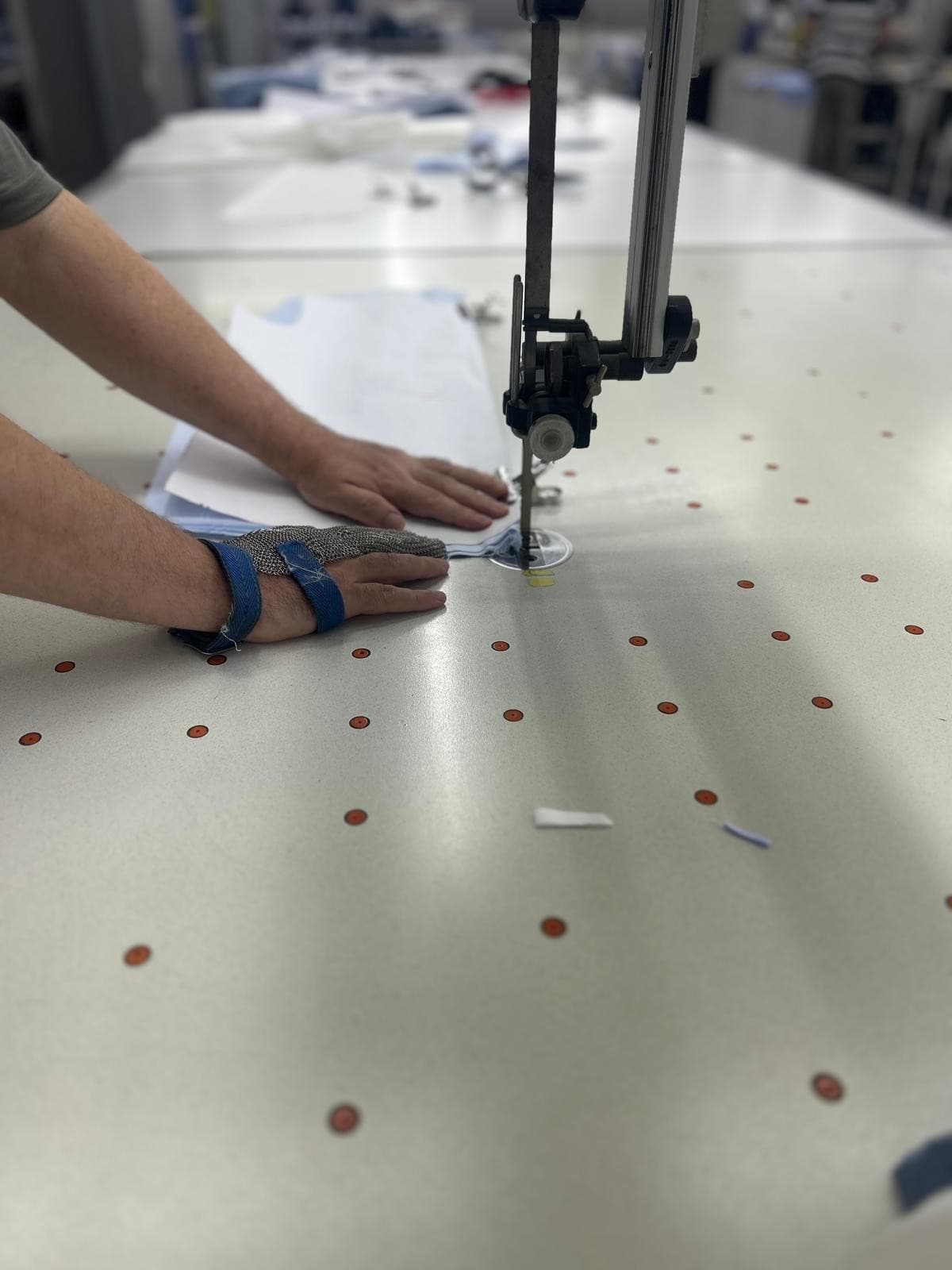
Ensure consistency in shirt production by jointly managing operational sequence, visible seam standards and in-line control points.
Sewing is a chain of operations
Collar, cuff, pocket and body parts go through different preparation steps and are assembled in a certain order. Small changes in the model can change the machine, apparatus, processing time or control point.
Technical workmanship standard
Seam type, margin, needle-thread compatibility and visible topstitch distance should be described in the technical file. An incidental detail on the sample should not replace the written standard.
- Collar and cuff symmetry
- Pocket and front placket placement
- Arm-body junction
- Stitch density and tension
- Buttonhole and button durability
The advantage of inline control
If the difference is caught in the relevant operation before it is seen in the finished product, the correction area is wider. Measurement, appearance and workmanship findings are not only sorted; The root treatment and its impact on subsequent production are evaluated.
Define your workmanship standard
Erten Tekstil carries out sewing operations in private label shirt production with approved samples and product-specific control points. In the form, you can share the critical workmanship details of your model and the level of quality you expect.
See the same in the table before deciding.
Model-specific order of operations
Stitch and look definitions
Critical inline points
Cause and prevention again
How do we approach this issue at Erten?
The control plan focuses on preventing the variation from recurring as well as sorting out the final product.
Content review area: Erten Tekstil product development, production and quality approach. Commercial suitability is also evaluated based on product and order information.Frequently asked questions about this topic
Is quality control sufficient only at the end of production?
No. Pre-production, in-line and final inspections should be planned together to find critical differences early.
Does every model have the same checklist?
Basic controls may be common; Model-specific collar, pocket, pattern or stitching details are added separately.
Let's evaluate your production needs together.
Sharing your product category, approximate quantity and target date is enough to get started.
It is not necessary to have all the details ready at the initial consultation.