
Product identity
Target customer, product level, pattern, fabric and collection appearance are defined together.
Private-label woven shirts for men and women, business shirts, casual shirts and overshirts, made in Istanbul. Plan your fabric, fit, samples, labels and packaging with our team.
Flexible MOQ · Assessed by style, fabric and colour.


Flexible minimum order options are assessed at quotation stage based on style, colour, fabric, trims and the production plan.
Approximate timing once technical details and materials are ready; product complexity and revisions may affect the schedule.
Approximate timing after approvals are complete and materials are ready. Transit and customs time are planned separately.
These lead times apply to shirts. Sales samples may take approximately 2–4 weeks; final quantities, prices and timing are confirmed in the written quotation.
Product identity starting from pattern and fabric
Labels, buttons, embroidery and packaging
Recorded product standard approved on sample
Production for your brand
Product options
Target customer, product level, pattern, fabric and collection appearance are defined together.
Buttons, embroidery, labels, stitching and other product details are planned around the brand identity.
Folding, garment protection, labelling and carton details are prepared in line with the delivery requirements.
Real Erten products
The product shown can be a starting reference. Your brand's final product identity is developed through sampling.
Request a shirt production quoteFabric and garment silhouette
Customizable decisions
A shared measurement standard is developed around the target customer and the brand’s required garment silhouette.
A product direction suited to the intended use, season, care requirements and target quality level.
Colour, placement and technical feasibility are assessed alongside the garment appearance.
Brand, size and care information is positioned on the garment in line with the order specification.
Folding, product protection and presentation decisions are created in anticipation of the brand.
The product and branding details approved on the sample become the agreed standard for bulk production.
A starting point for your order
We first check available fabric quantities and colours. A simpler style and colour range makes it easier to assess the feasibility of an initial collection.
Fabric order quantities, custom colour development and trim requirements are assessed together. Splitting the same total across more colours may require a different production plan.
The previous pattern and product standard provide a starting point. Fabric batches, trim availability and the new delivery window are checked again; previous terms do not apply automatically.
Collection ideas
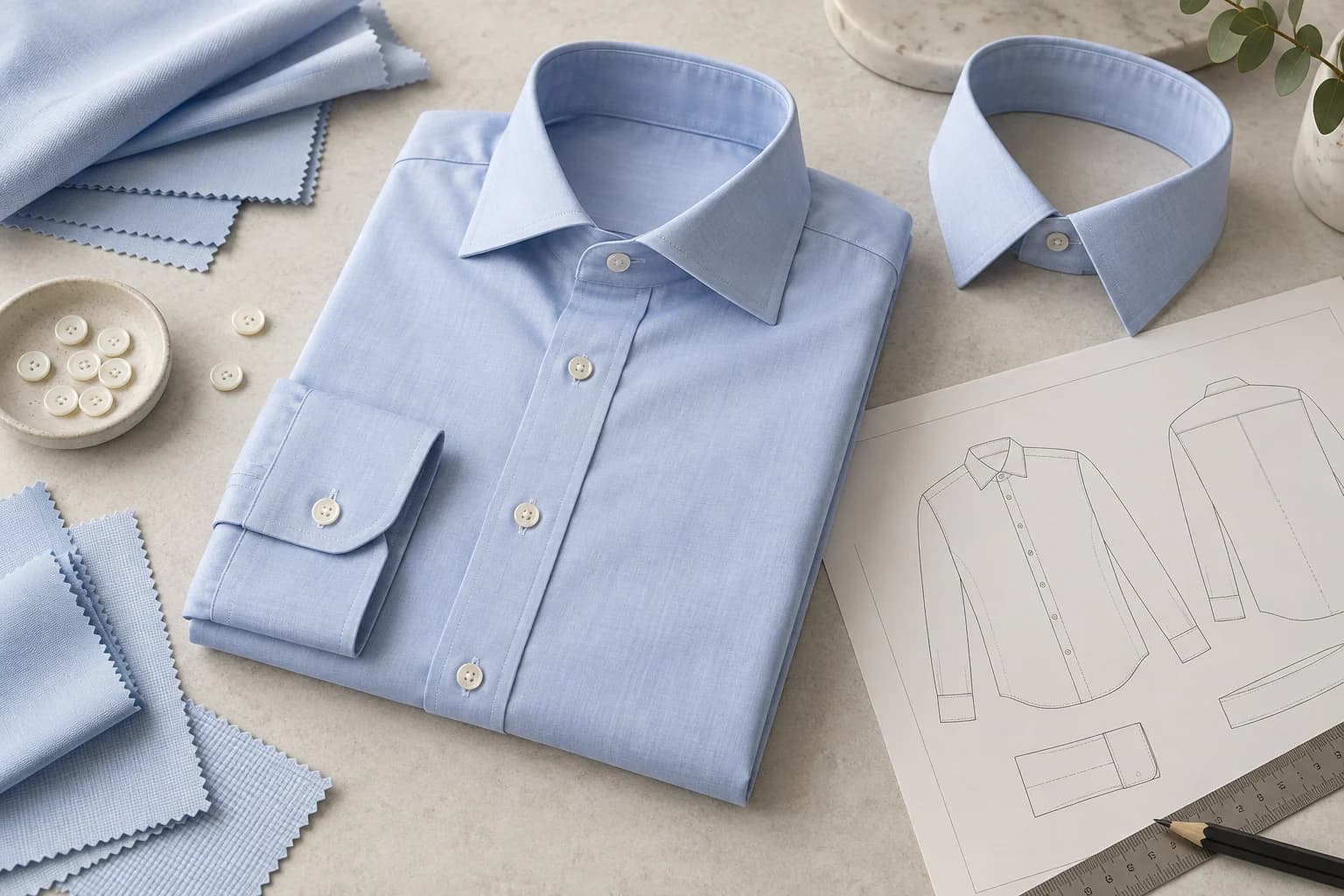
Explore blue cotton poplin, classic collars and single-button cuffs for your businesswear collection. Refine the collar shape and fit across sizes during sampling.
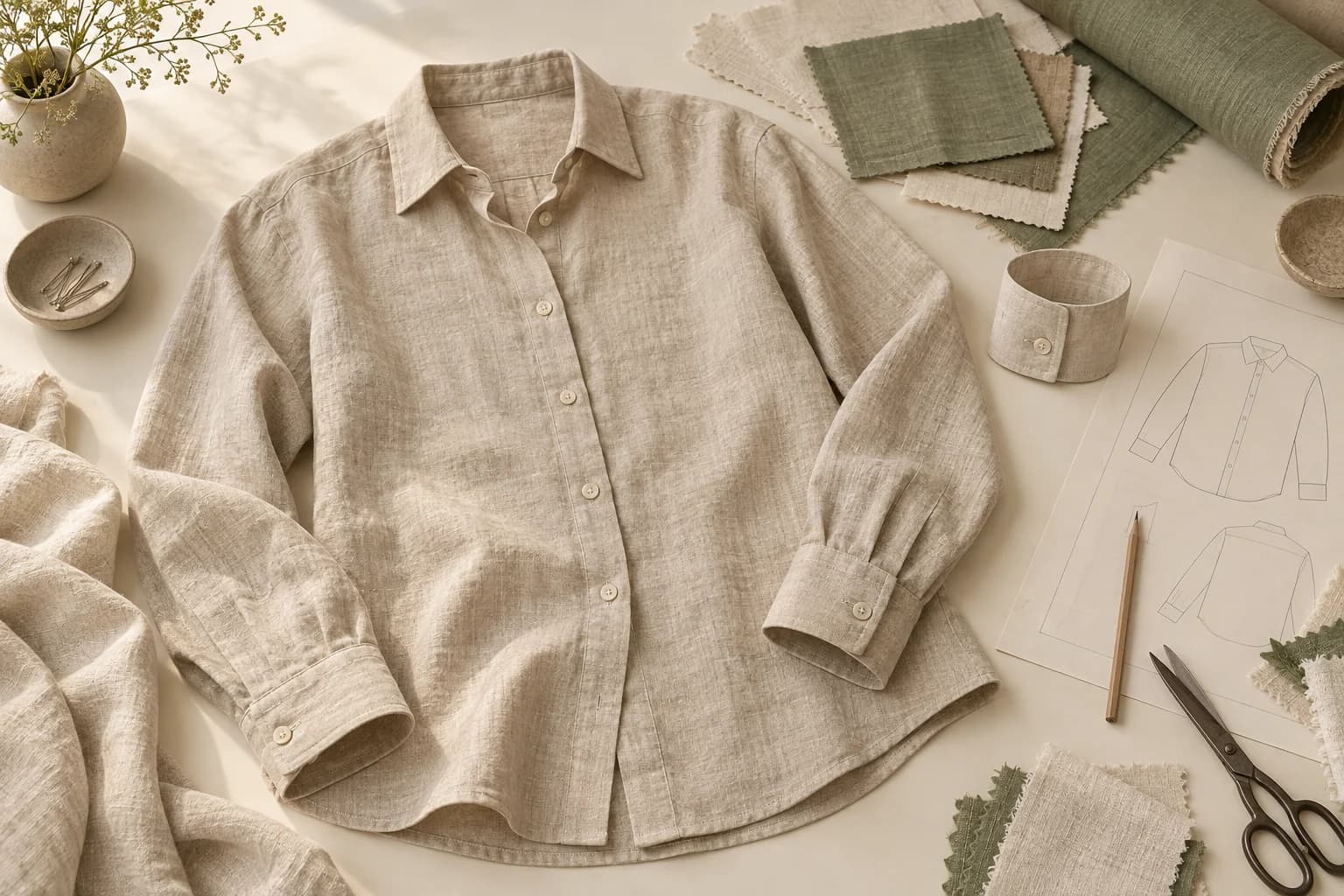
Bring lightweight fabrics, relaxed fits and natural textures together in your summer collection. Consider sand, off-white and sage tones alongside fabric drape and your collection’s colour palette.
Preparation for the production meeting
From sample to production
We assess the target customer, sales market, product category and quality positioning.
Pattern, fabric, colour, collar, cuff and visible details are clarified.
Labels, buttons, embroidery, packaging and supply methods are determined.
All decisions are verified on the garment and converted into the standard for bulk production.
Preparing for the initial consultation
before you decide
Flexible MOQ. Minimum order quantities depend on style, fabric and colour together. We do not publish a single fixed minimum.
Sample charges, payment, delivery and packaging terms are confirmed in the written quotation after your product review. You can start before your technical file is ready.
Yes. The product type, target customer, approximate quantity and target date are enough to begin an initial assessment.
For each order, we assess whether brand-supplied materials are suitable and available in the required quantity, and how they will be supplied.
A reference garment, design information and size chart can help us understand the product brief more quickly.
Placement, size, colour and product suitability are assessed during sampling.
Folding, product protection, labelling and carton information can be planned in line with delivery requirements.
The approved sample and recorded product information form the shared reference for production and inspection.
We can begin the initial assessment with the product type, approximate quantity, target date and any available reference information.
Related content
Start the product conversation