
Customer shares
Product and delivery information that defines the order’s quality requirements.
- Approved sample or product reference
- Size and product information
- Branding and packaging requirements
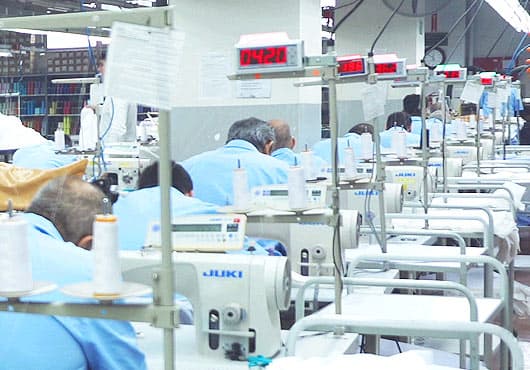
We assess initial products, product-specific operations, measurements and appearance during production so potential differences can be addressed early.
The inspection scope is defined around the garment construction and order criteria.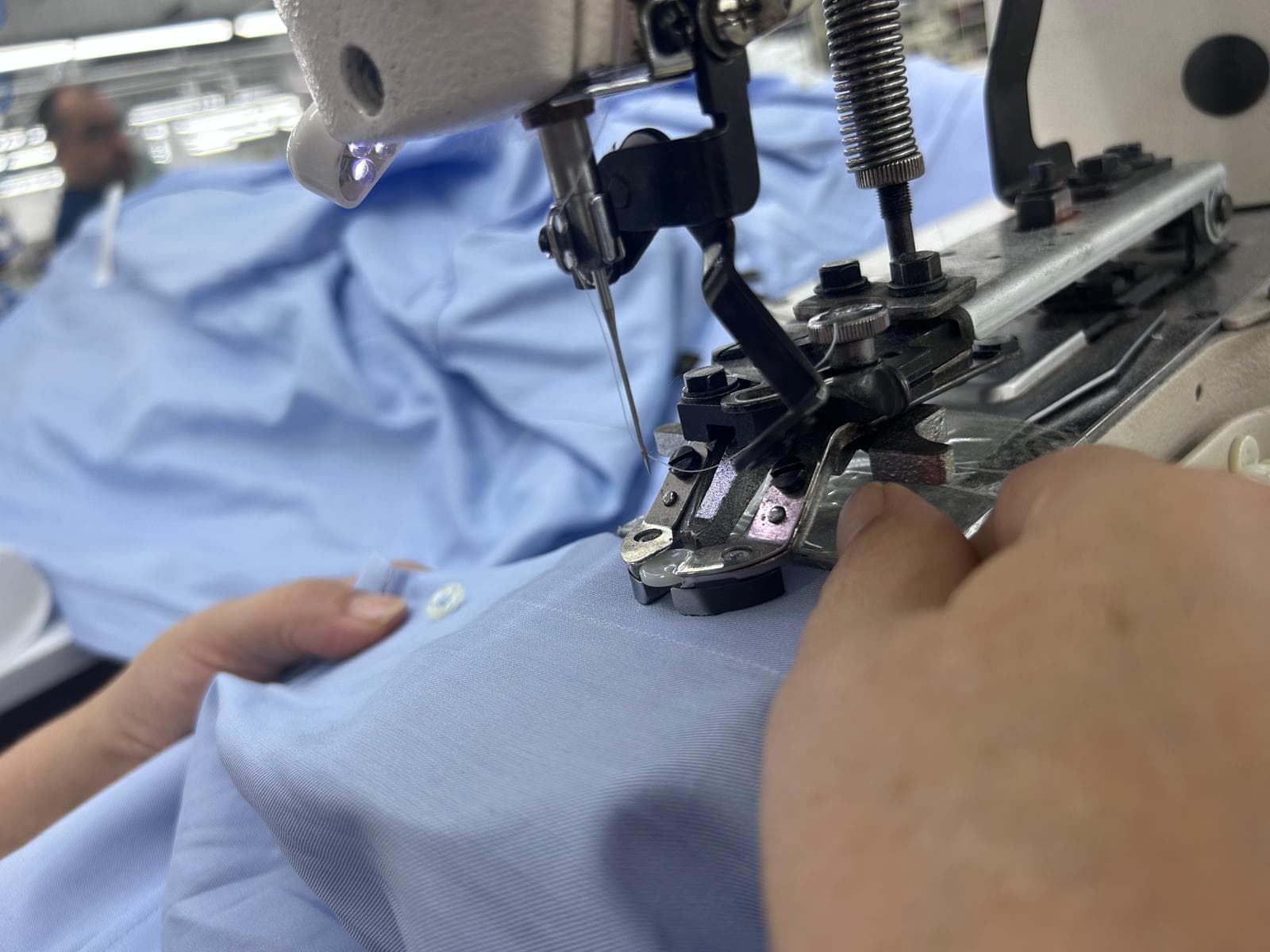
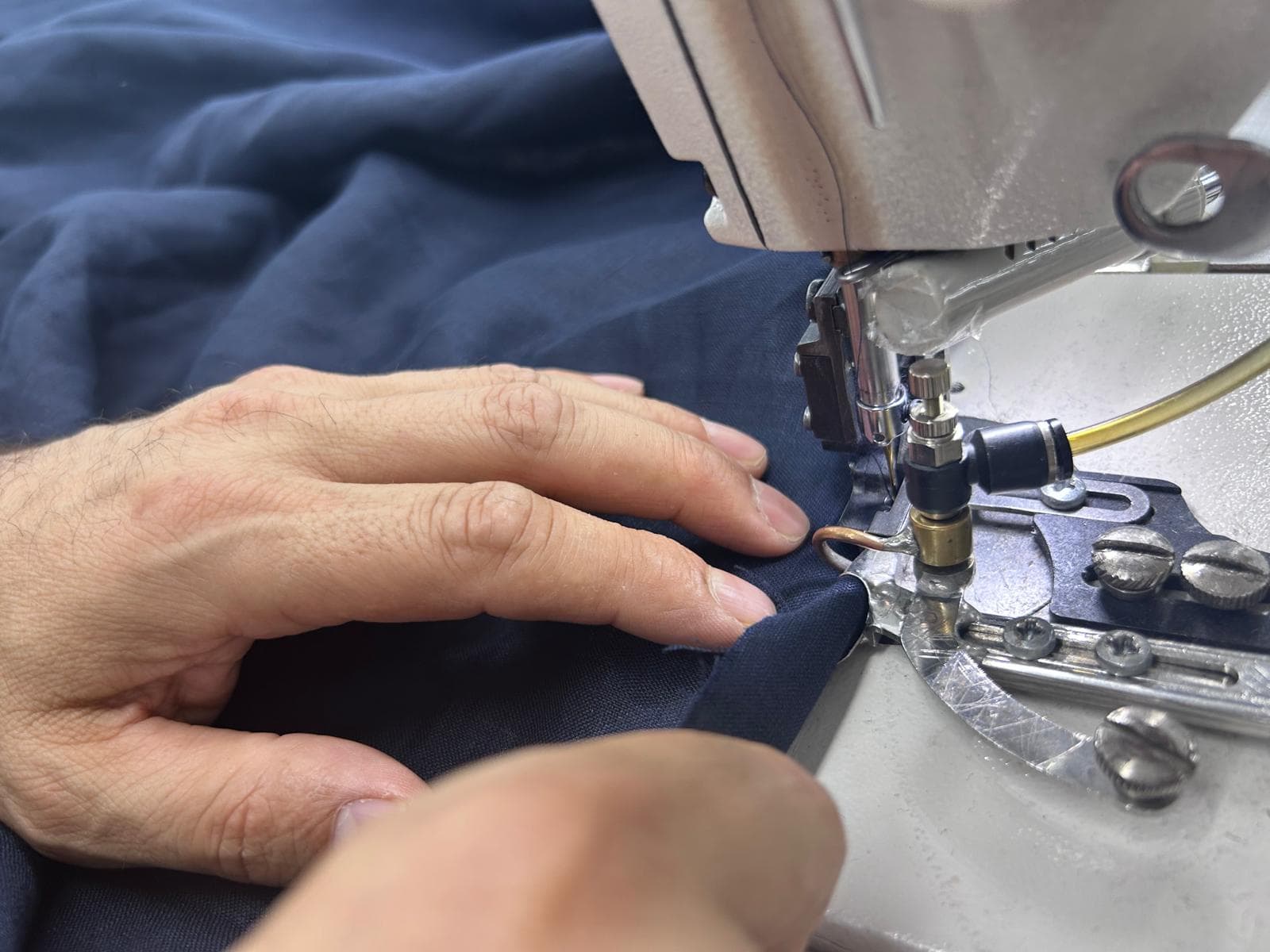
Checking the first garments against the approved standard
Collar, cuff, pocket and visible workmanship checks
Addressing variances before they carry over to further garments
Shared quality reference
Product and delivery information that defines the order’s quality requirements.
Garment, material, measurement and appearance checks appropriate to each production stage.
A recorded decision that ensures the next production stage works to the same standard.
Quality-control framework
Early production garments are checked against the approved standard for measurements, appearance and workmanship.
We assess the key points affecting shape, proportion, symmetry, stitching and garment appearance.
Placement, alignment, appearance and stitching details are checked against the product construction.
Trims, stitch appearance and order-specific details are assessed.
Key measurements defined by the garment construction and size chart are checked during production.
Assessment route
Any variance in measurements, appearance or workmanship is clearly identified.
The relevant material, process, product category and subsequent steps that may be affected are examined.
The expected result is restated clearly for the relevant operation.
Further garments are checked to determine whether the same variance persists.
Customer decision points
before you decide
Depending on the garment, the first pieces, measurements, collar, cuffs, pockets, front fastening, buttons and visible stitching can all be assessed.
Helps verify early that production aligns with the approved sample and product information.
The measurement checks are planned around the garment construction, production stage, size chart and order requirements.
The decision depends on the type of variance and the operations and products affected; we do not assume the same outcome in every case.
We share any issue that may affect the order criteria, approval or target schedule with the buying team.
Used with measurements and product information as a shared reference for appearance and workmanship requirements.
Start the quality conversation