

Isn't it enough to just check the finished shirt?
A sewing or measurement problem noticed at the last inspection may have spread to many products. It is better to fix the approved sample first and put specific control points for your product in the cutting, sewing and final product stages.
Explore our approach to qualityQuality is not sought only at the end of production
A variance found at final inspection is not always easy to correct. Quality checks should therefore run throughout production, beginning with product-information and material verification.
Finalize shared reference before production
The approved sample, size chart, tech pack, fabric and trim decisions form the basis of the inspection plan.
- Compatibility of product and measurement information
- Fabric and trim verification
- Approved sample registration
- Critical appearance and workmanship points
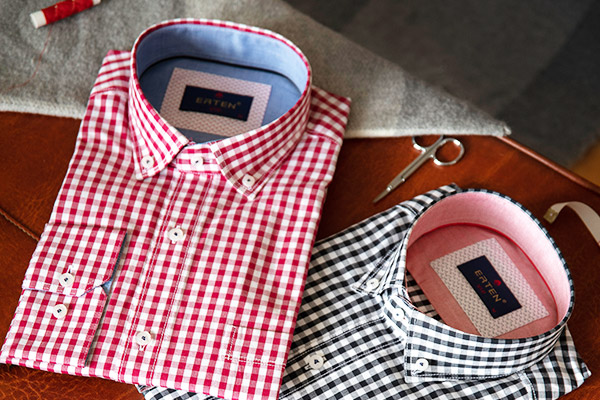
Catch differences early during production
In-process measurement, stitching and appearance checks help us address recurring variances before they affect more garments.
Compare the finished garment with the order specification
Final inspection must compare not only the shirt's appearance but also its measurements, labels, packaging and dispatch preparation with the order criteria.
Make a single control point measurable
For collar symmetry, specify the measurement points, accepted tolerance and inspection stage instead of asking for it to 'look right'. Use the same measurement method for sample approval, in-line checks and final inspection. Record any defect, corrective action and reinspection separately.
Erten’s AQL 2.5 and ITS quality control records are shared on request. Check the product, batch and date covered by each report; a record does not automatically validate every future order. Sedex membership is not product certification.
Define critical inspection points for the product
The same checklist may not be sufficient for every shirt. Product details such as pattern matching, collar symmetry, double cuffs, dedicated pockets or visible stitching should be included in critical checkpoints.
The inspection plan must align with the approved sample and technical information, and acceptance criteria must not be open to interpretation.
- Dimension and tolerance
- Stitching and appearance
- Collar, cuffs and trims
- Labelling, folding and packaging
Manage the cause of the finding, not just the result
If a variance recurs, isolating the defective piece is not enough. We identify the operation in which it arose and apply corrective action to prevent it carrying over to further garments.
Inspection records show which standard the buyer and manufacturer followed and help maintain the same reference for repeat orders.
See the same in the table before deciding.
Approved sample, material and technical information verification
Critical size, stitch and appearance checks
Comparison with order criteria
Labelling, packing and carton preparation
How do we approach this issue at Erten?
Our quality approach builds product-specific inspection points into the production workflow, rather than looking for variances only at the end.
Content review area: Quality control approach. Commercial suitability is also evaluated based on product and order information.Frequently asked questions about this topic
Why is a certified sample important?
The approved sample gives the production team and buyer a shared reference for appearance, measurements and workmanship.
Let's talk about your product.
Write down the most critical quality expectation for you; Let's discuss at what stage it will be checked.
It is not necessary to have all the details ready at the initial consultation.