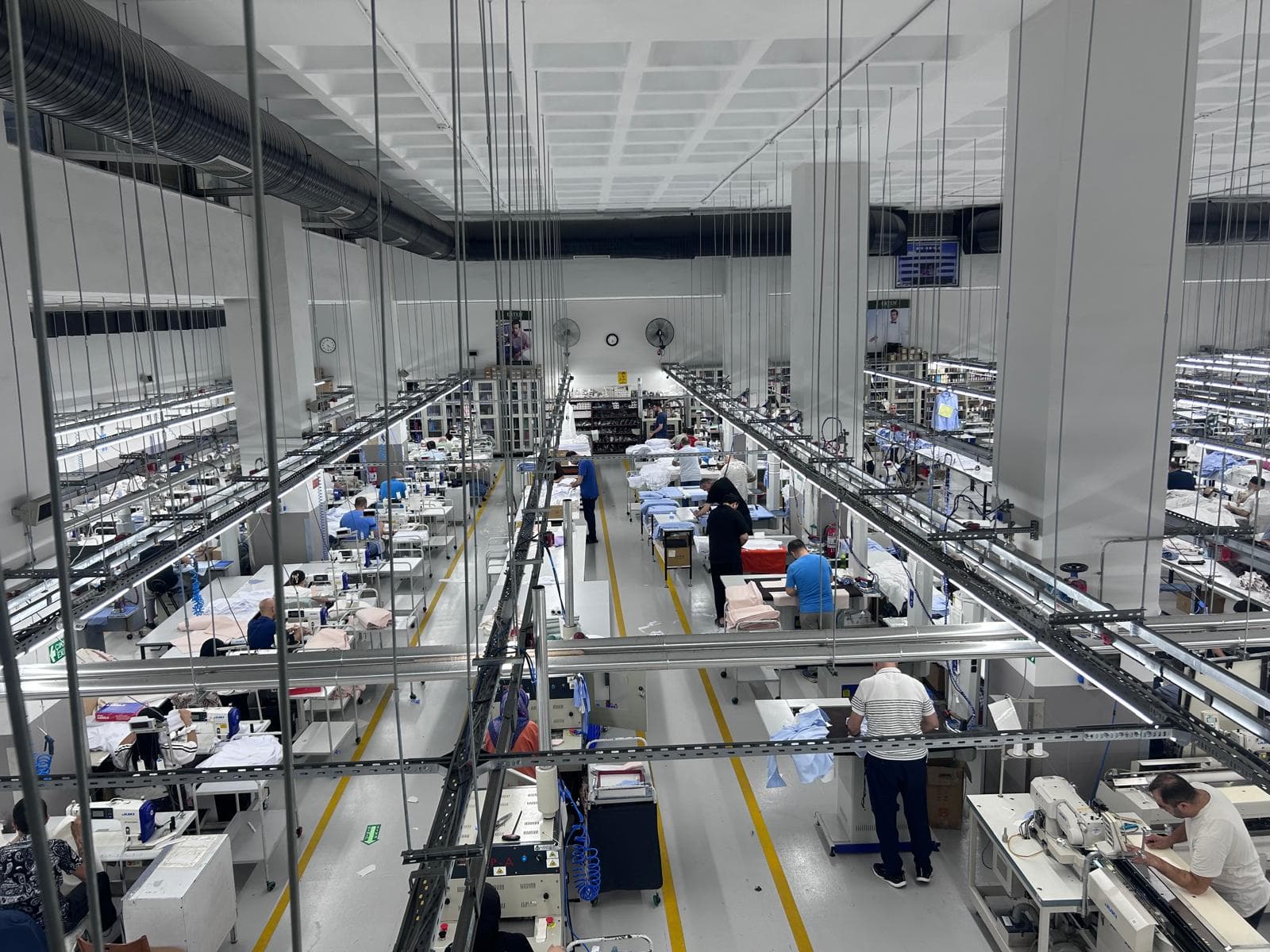
For children's shirt projects, age group, body measurements and comfort are the starting points. School, occasionwear and everyday requirements inform the sampling and material plan.
Plan production around your brand, from fabric and fit to sampling and packaging.
Style and colour options
Choose your collection direction.
An age label alone does not define a child's fit. Consider height, body measurements, movement and ease of dressing together. For everyday, school or occasion collections, choose fabric feel, fastenings and size groups around the intended use.
01
Checked short-sleeve children's shirt
A small check and short sleeves can suit everyday ranges. Adjust sleeve openings, pocket size and button spacing to children's proportions.
02
Blue long-sleeve children's shirt
A solid colour can work for school or casual collections. Test neck comfort and arm movement for the intended age group.
03
White band-collar children's shirt
A simple band collar offers a different occasionwear direction. Choose band height and the front opening with ease of dressing in mind.
Kids Shirts
Fabric and collection direction
Share the required fabric handle, weight, care expectations and destination-market testing requirements at the outset. Materials and trims are assessed for the age group and intended use.
Kids Shirts
Style-specific manufacturing details
Samples are reviewed for age-appropriate grading, arm movement and ease of dressing. Button attachment, small parts and decorative trims are included in the product review.
Kids Shirts
From sample to order
Start with a reference garment, size chart or design file. We review styles, colours and size quantities alongside labels, packaging and the destination country. Sample approval, material availability and a written quotation establish the production scope.
Product development guide
The right sample. Clear decisions.
01
Fit and wearing comfort
A children's pattern should not simply be a scaled-down adult pattern. Develop shoulder, neck and sleeve proportions for each size group. Assess sitting, raising arms and dressing movements, and state target height ranges in the size chart.
02
What to check on the sample
Include button attachment, trim selection, seam contact with skin and hard or sharp details in the inspection scope. Share the age group and destination market from the outset so relevant product requirements and the testing plan can be agreed.
03
Care, finishing and packing
Allow for frequent care when choosing fabric, colour and trims. Check garment dimensions and the feel of collars and cuffs after care. Label position and softness also contribute to comfort.
Preparing for samples and a quote
A starting point for your project.
Share your preferences for this style, approximate quantity, colour and size breakdown, target date and delivery country.
Age group, height range and size distribution
Everyday, school or occasion use
Destination market and product-inspection requirements
If your tech pack is not ready, we can start with a well-fitting reference garment, measurements and visual references. Agree fabric, fit and trim approvals before production.
What information is needed to start a children's shirt project?
Provide the age range, destination country, size chart, intended use and required testing scope. Suitable production, sampling and verification steps are clarified before quotation.
Is age enough to create a children's shirt size chart?
No. Height and key body measurements are also needed. Share the target customer's sizing standard or a well-fitting reference garment. Develop samples and size groups from that information.
How is the minimum order determined?
Flexible MOQ. Order quantities are assessed by style, fabric, colour and size distribution. Share your approximate quantity so we can review options that suit the materials and production plan.
How are branding and international delivery planned?
Brand and care labels, packaging, destination country and delivery requirements are defined for each order. Transport, delivery terms, costs and timing are confirmed in the written quotation.